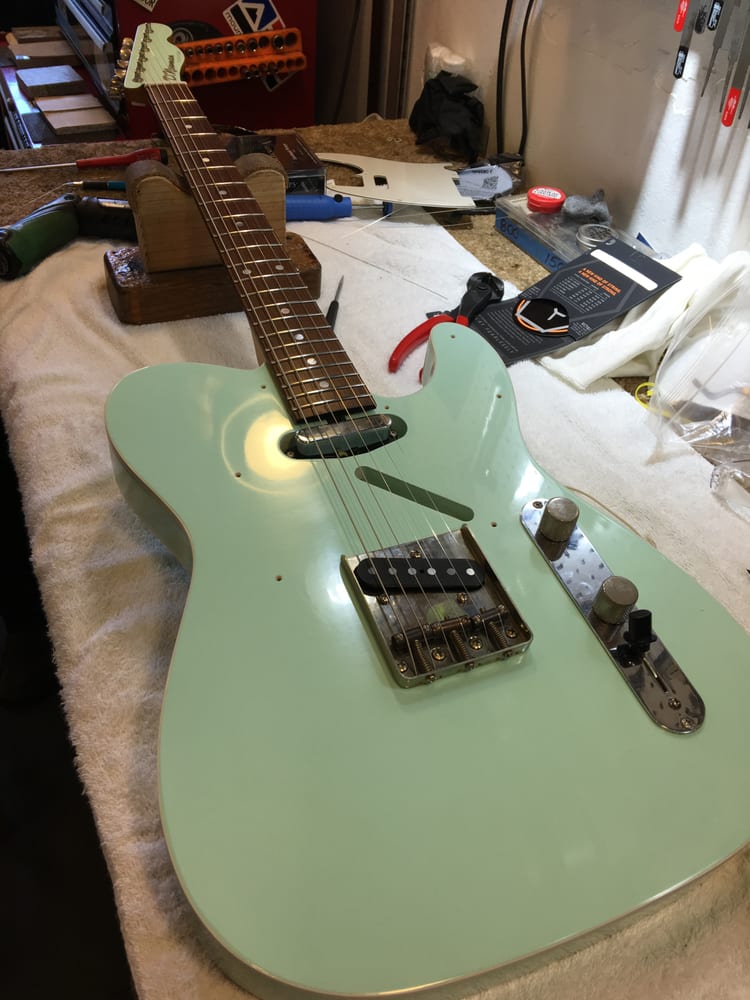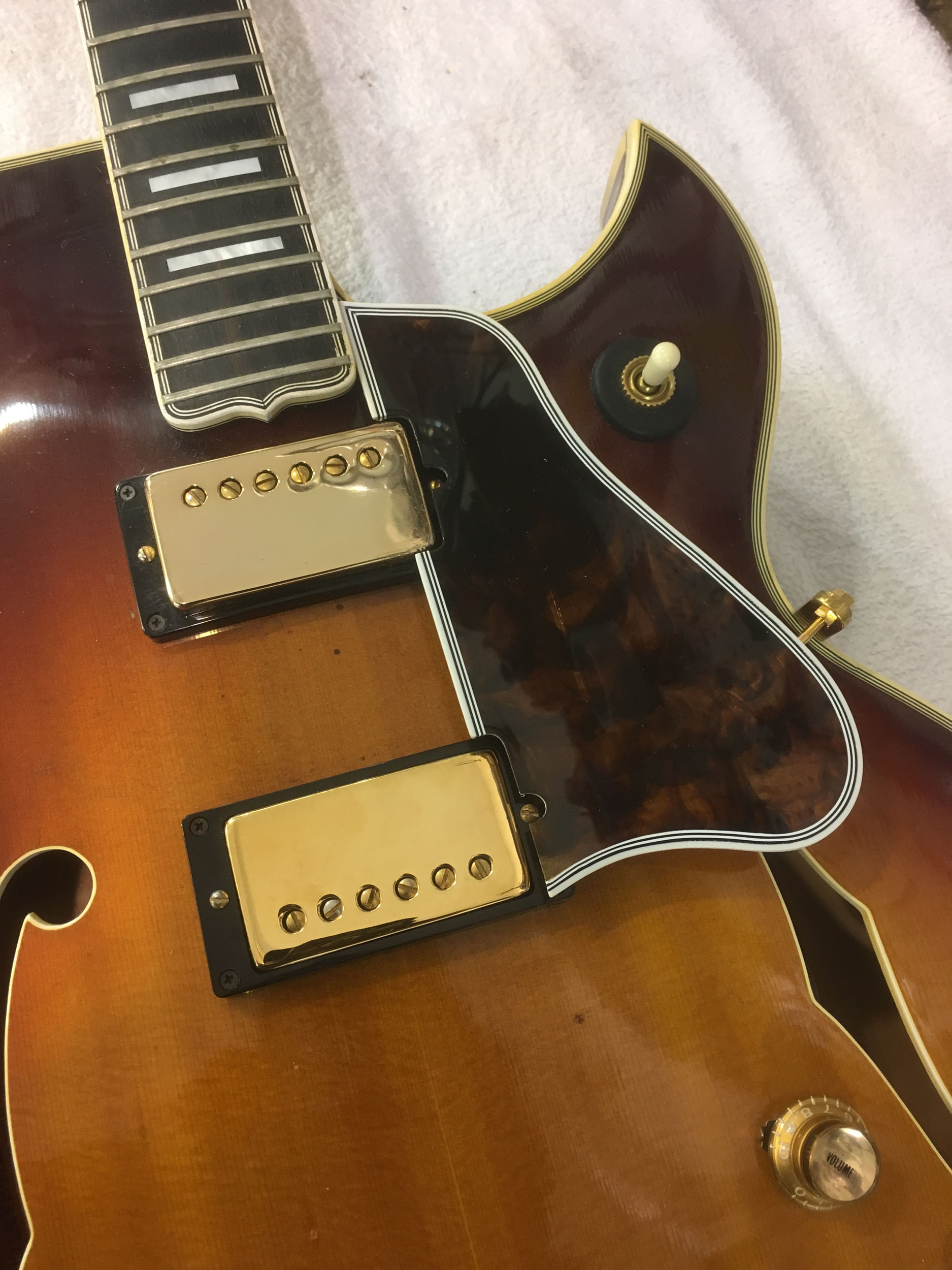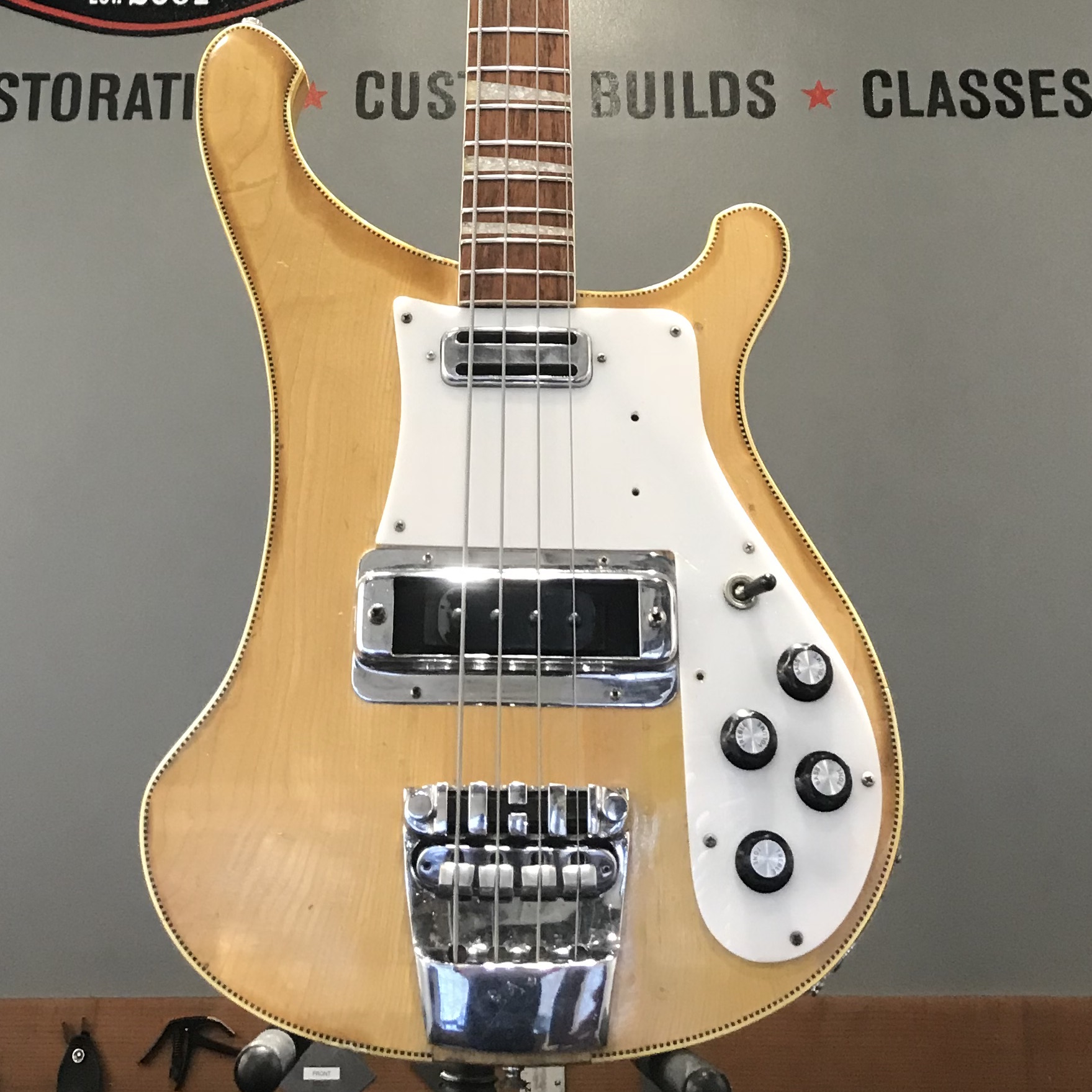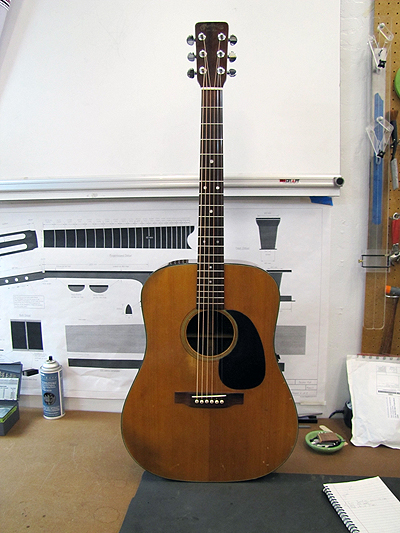


The Jerry Garcia Alligator Strat is done! Well, almost – our client didn’t include the iconic stickers with his box of parts. Oh well… we’ll put those one when he comes to pick it up. We think it turned out great – Jerry would be proud.
It’s emails like this that make this job fun:
Hey guys just want to thank you again for bringing my Gibson back to life ! Can’t put it down and my girl friend is starting to worry.” – Michael
Thanks, Michael! You made our day.
Roger Sadowsky builds some fantastic hi-end guitars and basses, and is a well respected member of the luthier community. We recently stumbled across an article of his discussing the Buzz Feiten System and the PLEK machine on the interwebs, and thought we’d re-publish it here:
I have great respect for Buzz as a guitarist and I was excited when he came to visit me in late 1985 or early 1986. I do remember it was at my old shop at 33rd and Madison. I was already the leading guitar tech in NYC for improving tuning stability and intonation for the studio pros in town. After Buzz explained his system to me, I agreed to make two electric guitars and incorporate his “system”.
Six months later the guitars were done and I invited several players I respect to play them and compare them to my regular guitars. The consensus of all the players was the difference, was at the most, “slight”. My feeling at the time was if I was going to pay a license fee to use the system and promote it as an “improvement”, the difference needed to be “smack in your face” obvious. It wasn’t.
There are two main features of the Buzz Feiten tuning system. First, it involves moving the nut about .020″ (twenty-one thousandths of an inch) closer to the first fret. This is to compensate for the increased stretch of the string, the closer you are to the nut. The stretching of the string drives the note sharp, so moving the nut closer to the first fret compensates for this. Regarding the nut location, this has been in the guitar building literature for 150 years…..so except for the fact that Feiten was the first to patent this, there is nothing new here. I have been incorporating this compensation into my guitars for the last 30 years. The second feature of the Feiten system is a set of offsets for intonating the guitar at the bridge. These offsets range from plus or minus 1 or 2 cents (a cent is 1/100th of a tone). The problem I have with this part of the equation is that I pretty much defy anyone to play a note 10 times in a row in 1-2 cent tolerances. How close your finger is to the fret, which finger tip you use, which part of the fingertip you use, how much finger pressure you use, etc, etc, etc, all contribute deviations greater than 1 to 2 cents. In addition, as your strings age, the intonation changes. And every time you change strings, let alone brands or gauges, all of this changes as well.
So with all respect to Buzz, I really think the system is one of “smoke and mirrors”. If you have paid good money to have your instrument fitted with the Feiten System, you will hear the difference because you want to feel you got your money’s worth. On a properly built instrument, with the nut cut at the right height and placed at the correct location, and a properly intonated instrument, I doubt if you will hear any difference at all.
I am often asked my opinion of the PLEK machine…..
I was one of the first people that PLEK approached many years ago….and I have stayed current on the improvements they have made over time. Honestly, I have yet to find a good reason to purchase a PLEK.
First of all, I made my reputation on my fretwork. There is no machine on the planet that can do better fretwork than Sadowsky Guitars. Second, there is a fundamental flaw with the logic behind the PLEK. 99% of all neck problems are in the true-ness of the fingerboard. I am fundamentally opposed to removing material from the frets to compensate for problems in the fingerboard. If there is a playability issue with one of my instruments, I will remove the frets, rework the fingerboard and then refret with our impeccable fretwork.
I can see some benefit to companies that import a lot of inexpensive instruments or to repair shops that do a lot of fret dressing and set-up work. However, a PLEK machine brings no “value added” to Sadowsky Guitars, other than having to pass the $100,000 + expense to my customers.
My final word on the subject is that the US sales representative for PLEK, after working on one of my instruments, called to tell me “Roger–you are about the only builder I know who does not need a PLEK”.
Thanks Roger – we couldn’t agree more. Well… we do think we’d give Sadowsky a run for their money with our fretwork…
We were presented with an interesting challenge this week – check it out:
This is an Irwin Heavywood guitar, built by our client Jay (on the right). It was in need of a Fret Level & Setup, which is a fairly standard job for us, but the real challenge was installing a K&K pickup (our favorites!). We install these pickups all the time, and have refined our technique so we can get in and out of the guitar fairly quickly. Normally, the pickup’s output replaces the guitar’s endpin – but this guitar doesn’t have a standard endpin, plus it’s very far away from the bridge, and the K&K wire doesn’t reach that far. We discussed the particulars with Jay, and we all agreed the best placement for the output would be on the lower most corner.
The bottom corner has a substantial wood block, so we could install the output jack with confidence that it wouldn’t stress the fragile sides. We carefully measured out the block – not an easy task, since the only access we had was through the very small soundholes, which were pretty far away from the edge. As you can see, it’s a pretty tight fit in there:
We taped off a marker on the outside of the guitar, giving us a visual indicator of where exactly the side block was:
We talked this one out at great length – we only had one chance to do this right. If we drilled in the wrong spot – game over. Fortunately, our meticulous approach paid off, and drilling the hole for the output jack went off without a hitch.
It was a bit problematic getting our hands inside the guitar to tighten the retaining nut on the output jack; it’s a good thing that we spend our time working on guitars rather than working out, so we’ve got thin enough arms to get us into tight spaces:
Viola! The install is complete. We used a flush mount barrel jack, so Jay could run a right angle instrument cable up the side of the guitar and through his guitar strap (for strain relief). The pickup sounds great!